Institut für Nachrichtentechnik
Univ.-Prof. Dr.-Ing. Alexander Raake
In this project, groups of 2-4 people work together on one specific topic related to communication and multimedia. The students shall work independently and present their results at the end of the project.
If you register for the project course, groups and topics will be assigned during the introduction session. We certainly try our best to give everyone a topic he or she likes, but please be aware that we can not guarantee that you will get one specific topic.

Aachen’s public sculptures are interesting objects that can be digitally captured and reconstructed for use in virtual reality. Creating digital 3D representations of these monuments can support their documentation and preservation while also making them accessible for virtual viewing and exploration. In this project, students will explore how real-world objects can be turned into interactive 3D assets using available cameras and open-source reconstruction tools. The students will select a set of sculptures, fountains, or monuments in Aachen and capture them from different viewpoints and experiment with different 3D reconstruction approaches, for example by taking many photos from different angles, using depth cameras, and different reconstruction methods such as Photogrammetry, Nerf and Gaussian Splatting.
The project will cover the complete workflow from planning and capturing the data to generating 3D reconstructions for VR. Students will investigate how reconstruction methods and capture conditions, including image count, trajectory, lighting, and object characteristics such as metal or water, affect reconstruction quality. The reconstruction approaches will be evaluated based on factors such as visual quality, completeness, processing time, and suitability for VR. The final outcome will be a working reconstruction pipeline, and an interactive VR demonstration.
Contact person: Abhinav Bhattacharya M.Sc.
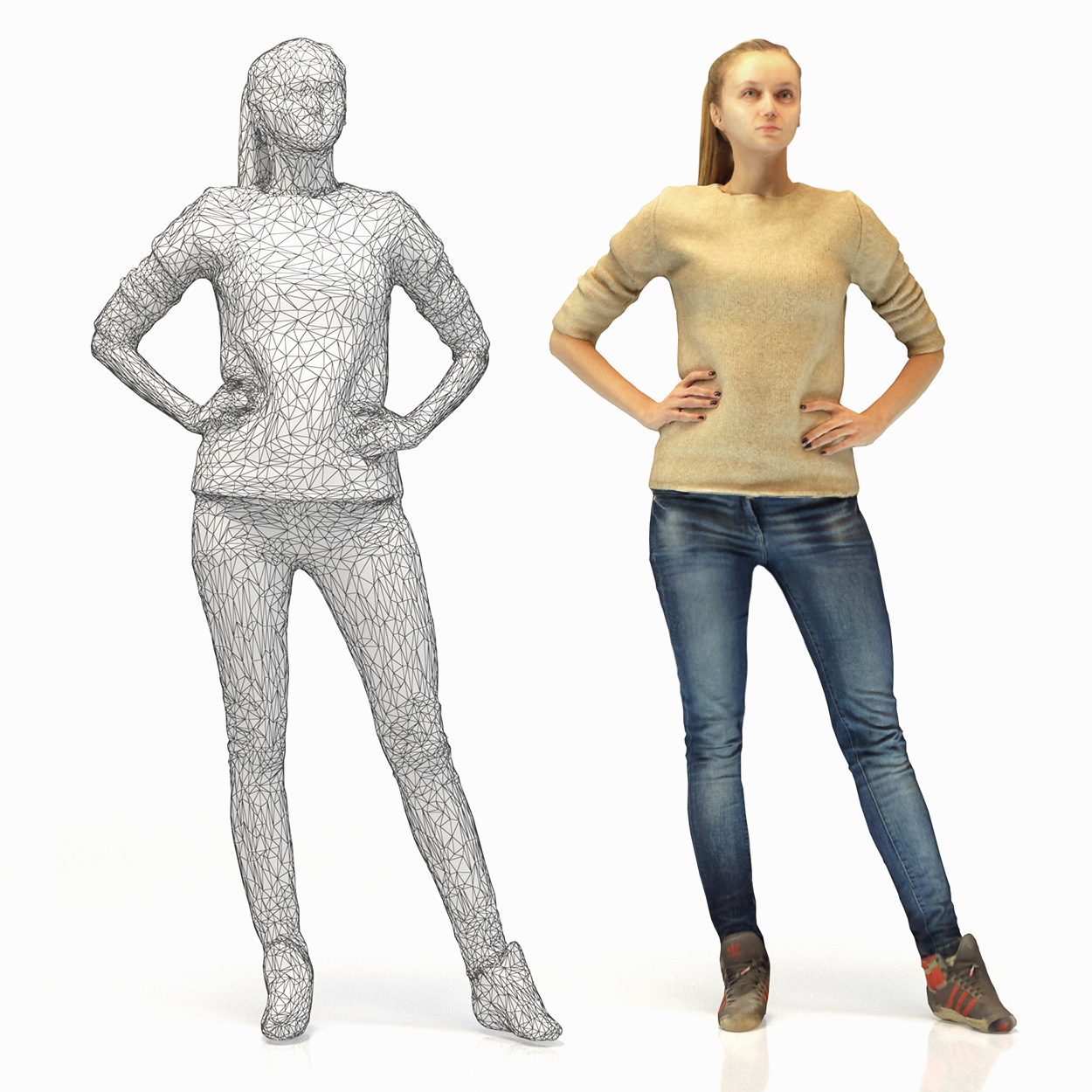
Avatars represent users in virtual reality (VR) and are an important part of social interaction and embodiment in virtual environments. While many applications use generic avatars, personalized avatars can help users identify more strongly with their virtual bodies and provide a more natural representation of themselves and others. But creating those avatars requires capturing a person’s appearance and transforming this data into a usable 3D model, which often involves significant manual effort. This project therefore explores an automated pipeline for capturing a person and generating a usable personalized avatar.
In this project, students will develop a pipeline that includes the capturing of a person’s likeness using images from one or more cameras, processing the captured data, generating a 3D mesh, adding a skeleton so that it can be animated, and importing the resulting avatar into Unity. Students will investigate suitable capture setups and methods and consider how the quality and consistency of the captured input affects the subsequent processing steps. The goal is to build a robust and automated pipeline with minimal manual intervention. Students are expected to have some programming experience, preferably with C# and Python, as well as Git, and will use Unity to test and demonstrate the generated avatars. Throughout the project, students should document their progress, technical decisions, challenges, and learnings, and present their final prototype at the end of the project.
Contact person: Ulrik Deneken M.Sc.

Even when not directly interacting, the behaviour of other people in the same environment affects how people explore their surroundings. A crowd assembling in front of a museum painting might indicate an especially interesting or famous work, and a trampled path in a park might indicate a more efficient way from A to B. In more direct contexts, watching another person struggle with a complicated public interface might already teach the next user the correct approach, and messages left on a sidewalk might lead partygoers to their destination.
In contrast to the real world, virtual environments often remain static, being reloaded in their initial state for every visitor. When entering such an environment alone, users have to rely on pre-built tutorials showing them one possible way of interacting with a space and hope for the environment design to indicate features of interest.
In this project, students will work on recording user interactions in and with a virtual environment and figure out different approaches for displaying these behaviours for future visitors. Approaches in this regard can range from building visual paths from aggregated exploration behaviour to the replay of a user interaction with a specific object or objects, or even the possibility to leave direct messages to the next visitor of a space. At the end of the project, the group should be able to show a live demonstration in which a VR user can see and explore data recorded from previous interactions in their current environment.
Contact person: Dr. rer. nat. Pauline Bimberg